7 water-based exercises to help you stay active this summer
The pool isn’t just for laps. Water-based exercises are one of the best ways to build strength and stay active in the summer—especially if heat, joint pain, or injury has made other workouts difficult.
The benefits are real, the exercises are simple, and the water does more of the work than you’d expect. Whether you’re at a community pool, a cottage lake, or the beach, there’s a lot of ways your body can move in the water.
Note: If you are unsure whether these exercises are appropriate for you, please consult your physiotherapist before attempting them.
Why water exercise works for almost every body
Water gives you buoyancy. That natural support means you’re free to move without the jarring impact of land-based exercises.
Water depth also matters. The deeper the water is around the affected joint, the less body weight that joint has to carry. For example, your knee may experience less loading in shoulder-height water than it would in waist-height water.
Water also creates hydrostatic pressure. This gentle pressure can help support circulation and may help reduce swelling, especially when the swollen area is submerged. This can be helpful for some people recovering after surgery or managing conditions such as arthritis or lymphedema.
The resistance of water also does quiet, steady work. It’s harder to push through than air, which means every movement can help build strength and endurance. You can adjust intensity by changing your speed, depth, body position, or the equipment you use.
Another upside is that water exercise may help support healthy blood pressure by improving circulation and helping blood vessels relax, making it a gentler option for some people managing hypertension.
And if balance or falls are a concern, water can provide support while you move. It may help reduce impact if you lose your balance, which can make aquatic exercise a meaningful option for people with balance concerns, osteoporosis, or bone density concerns when done at an appropriate depth.
How a physiotherapist can help you get more from water-based exercises
Water is forgiving, but that doesn’t mean all exercises are right for every body. Physiotherapists often recommend aquatic exercise for people recovering from surgery, managing arthritis, rebuilding strength after an injury, or looking for lower-impact ways to stay active.
A physiotherapist can also help you choose the right water depth, exercises, equipment, and intensity for your needs. For example, they may suggest deeper water to reduce joint loading or recommend deep-water exercises, where you are not touching the bottom of the pool, to help build core stability and control when appropriate.
What to know before you start aquatic exercises
Water workouts can deceive you. You may feel fine in the pool, then step out and realize just how hard you worked.
Always warm up first. Know your water depth before moving. Exercise with a buddy or near an on-duty lifeguard when possible. If you are recovering from surgery, managing pain, swelling, arthritis, lymphedema, balance concerns, or a recent injury, speak with a physiotherapist before starting.
For the exercises below, aim for water between hip and shoulder height unless otherwise noted. Shallower water generally increases weight-bearing demand. Deeper water generally reduces joint loading, but may increase the need for balance, core stability, and movement control.
If you are not touching the ground or bottom of the pool, the exercise may feel more challenging than expected. Start slow and increase difficulty as your body adapts.
You can also use pool equipment to adjust the challenge. Aqua gloves and foam weights can increase resistance. Aquatic belts and pool noodles can help with buoyancy and support.
7 water-based exercises to get your body moving this summer
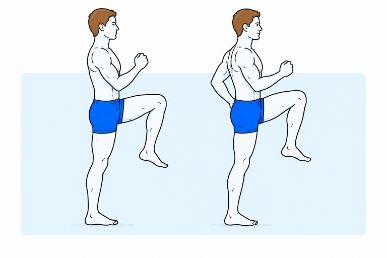
1. Warm-up march
- Stand with feet hip-width apart.
- March on the spot—swing your arms, lift your knees as high as you can.
- Keep your body straight throughout
- Repeat for 1 minute.
Increase intensity by speeding up. Move into deeper water if you want to reduce joint loading, but keep in mind that deeper water can require more balance and core control.
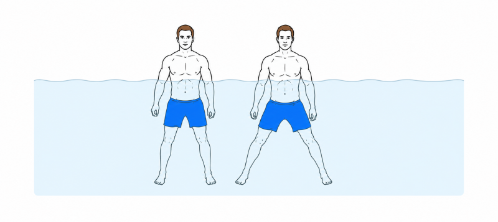
2. Side shuffle
- Stand tall.
- Step sideways with one foot, then bring your opposite foot to meet it.
- Take 10 steps in each direction.
Increase difficulty by moving faster. Moving into deeper water may reduce joint loading, but it can also increase the need for balance and control.
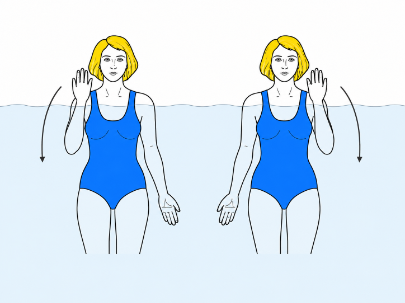
3. Arm curls
- Stand in shoulder-height water, arms at your sides.
- Keep your elbow tucked. Bend it to bring your hand toward the same shoulder.
- Perform 10 repetitions per side.
Add resistance by cupping your hand with palm facing up, using aqua gloves, or increasing your speed.
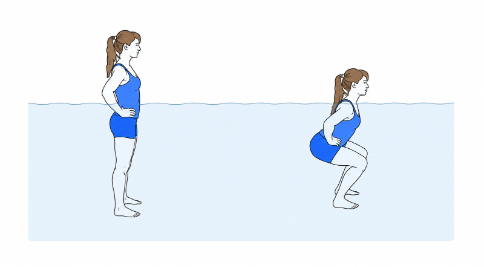
4. Bodyweight squat
- Stand in waist-height water, feet shoulder-width apart, hands on hips.
- Push your hips back and lower as if sitting in a chair.
- Push through both feet to rise. Repeat 10 times.
Shallower water increases difficulty. Deeper water may reduce joint loading. To increase challenge, stretch your arms forward or move more slowly with control.
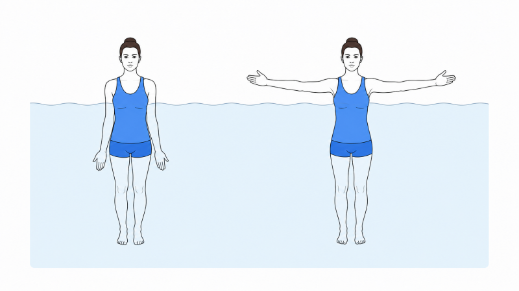
5. Arm raise fly
- Stand in shoulder-height water.
- Lift both arms to your sides with thumbs up.
- At shoulder height, turn palms forward and bring hands together in front.
- Open back out, then lower. Repeat 10 times.
Add resistance by keeping palms facing down throughout or using aqua gloves.
Shoulder exercises should be done in shoulder-height water so the shoulder joint is submerged. This helps you get the benefits of buoyancy and water resistance. If you are recovering from frozen shoulder, a fracture, or shoulder surgery, speak with a physiotherapist before trying this exercise.
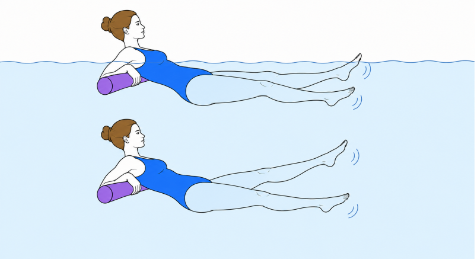
6. Leg kicks
- Place a pool noodle behind your back, held under both arms.
- Lean back to float, legs under the water.
- Flutter kick for a count of 10. Scissor kick for a count of 10. Keep your core tight.
- Repeat 2 times.
Increase difficulty by moving faster or using an aquatic belt for deeper-water exercise. Deep water exercise can increase the need for core stability and control. It may not be appropriate for everyone.
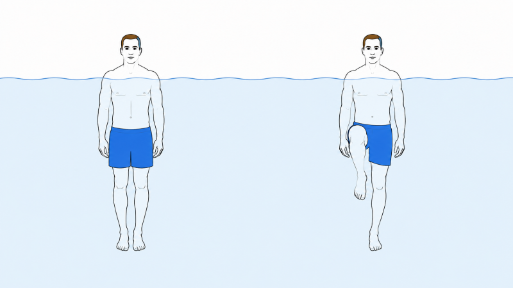
7. Single leg balance
- Stand on one leg with the opposite knee raised to hip height.
- Use the pool edge or a float for support as needed.
- Hold for 30 seconds. Switch sides.
Increase difficulty by moving to shallower water or closing your eyes. Natural water movement at a lake or beach adds extra challenge.
Ready to move better this summer? A Lifemark physiotherapist can build a plan with exercises that work for your body and the season.
Key takeaways
- Buoyancy reduces joint stress, making water exercise accessible for many fitness and mobility levels.
- Deeper water can reduce joint loading, while shallower water generally increases weight-bearing demand.
- Hydrostatic pressure may help support circulation and reduce swelling when the affected area is submerged.
- Water resistance can build strength and endurance, and intensity is easy to adjust.
- Deep water exercise may require more core stability and control.
- Aqua gloves, foam weights, aquatic belts, and noodles can help adjust intensity or provide support.
- Warm up before you start, know your depth, and work near a lifeguard when possible.
FAQs
Are water-based exercises good for joint pain?
Yes, water-based exercises can be helpful for some people with joint pain. Buoyancy reduces the load on joints, which can make movement more comfortable, especially for people managing osteoarthritis, recovering from injury, or returning to activity after surgery.
Can I do water exercises if I have high blood pressure?
Water exercises may help. It can be a lower-impact alternative to land-based cardio, but speak with your physiotherapist or healthcare professional first.
Can water exercise help with swelling?
It may help. Water creates hydrostatic pressure, which provides gentle pressure around the body. When the swollen area is submerged, this pressure may help support circulation and reduce swelling. This can be helpful for some people recovering from surgery or managing conditions such as arthritis or lymphedema.
How deep should the water be for pool exercises?
Hip to shoulder height works for most of these exercises. Deeper water can reduce joint loading, while shallower water usually increases weight-bearing demand. If you are not touching the bottom of the pool, the exercise may require more core stability, balance, and control.
Are deep water exercises harder?
They can be. Deep water reduces impact because your feet may not touch the bottom of the pool, but it can also require more core strength, balance, and body control. A physiotherapist can help you decide whether deep water exercise is appropriate for you.
Can I use pool equipment during water exercises?
Yes, pool equipment can help increase challenge or support you while doing water-based exercises. Aqua gloves and foam weights can increase resistance and make exercises more challenging. Aquatic belts and pool noodles can improve buoyancy and provide support.
Are these exercises safe for older adults?
Many older adults find aquatic exercises well suited to their needs. The water provides support if balance is lost, which can lower injury risk.
Do water exercises build muscle?
Water creates more resistance than air, which makes water exercises good for building muscle. Moving against the resistance, especially at speed, helps build strength and endurance.
Can I do these at a lake or outdoor pool?
Natural water movement from a lake or outdoor pool can add a balance challenge. Always check depth and exercise near a lifeguard or with a buddy.
How do I know which exercises are right for my condition?
A physiotherapist can assess your needs and build a plan suited to your body and goals. Book an appointment with a Lifemark physiotherapist to get started.