Shockwave therapy for lower back pain: how chiropractic care can help
Low back pain can develop for many reasons—a new activity, lifting more than usual, prolonged sitting, or a sudden twist or bend. When that happens, anything can trigger that familiar twinge, from twisting to check a blind spot, to bending down to tie your shoes. While rest and over-the-counter pain medication may offer some short-term relief, if left unaddressed, the deep ache can liner and interfere with daily life.
Shockwave therapy for low back pain is one tool a chiropractor may use as part of your rehabilitation plan. It offers a non-invasive treatment option for when pain, stiffness, or soft tissue irritation has not improved with self-care alone. Using sound waves to target specific areas of soft tissue, shockwave therapy may help reduce pain, improve local circulation, and support tissue recovery in areas contributing to stiffness and discomfort.
Learn more about how shockwave therapy works, when it’s used, and how it can help reduce low back pain, ease stiffness, and support your return to everyday movement.
When is shockwave therapy used for lower back pain?
Between 50 and 90% of people will experience at least one episode of low back pain in their lifetime. For many, symptoms can resolve within two weeks but for others, discomfort can linger for up to two months or more, or return with certain movements, activities, or positions.
Lower back pain that flares up with activity, exercise, or prolonged sitting doesn’t have one single cause. Common contributors include:
Disc-related injuries—which may create sharp, shooting pain
Twisting or bending injuries—often felt as a sudden onset of stiffness and tension
Prolonged sitting—office workers and commuters may develop tightness or sciatic pain over time, including conditions like sciatica and piriformis syndrome
When pain doesn’t respond to self-care, activity modification, or short-term pain relief medications, shockwave therapy may be considered as part of a broader rehabilitation plan that may also include exercise, hands-on care, education, and movement strategies. It may be helpful when irritated soft tissue, muscle tension, or tender areas are contributing to low back pain that has not improved on its own. A chiropractor can assess your movement, symptoms, and health history to determine whether shockwave therapy may be appropriate for your low back pain.
How does shockwave therapy work?
Shockwave therapy can help reduce pain for people experiencing low back pain and particularly when soft tissue irritation, muscle tension, or localized tenderness are part of the picture.
As Dr. Nicholas Antony, Chiropractor at North Oshawa Rehab & Foot Clinic, puts it: ”Shockwave could be a great tool in helping back pain.”
In chiropractic care, shockwave therapy may be used alongside hands-on treatment, exercise guidance, and education to address both pain and the factors that may be contributing to it.
The therapy works by delivering focused sound waves to the affected area. Some shockwave devices can reach tissue up to 5 cm beneath the surface—deeper than many other therapies—making it especially effective for targeting stubborn knots and ligament injuries that sit beneath the surface. These waves stimulate blood flow, reduce tissue irritation and encourage the body’s natural healing response. It’s non-invasive, which means no needles, no surgery and little to no downtime.
Results can vary from person to person. Many people notice a meaningful difference after each session, and most patients are given a clear picture of progress after about three appointments. If you’re wondering whether shockwave therapy can help your lower back pain specifically, a chiropractor can help guide that conversation.
How does a chiropractor use shockwave therapy to treat pain?
A chiropractor will take time to assess and understand your injury, observe how you move, identify which positions or movements trigger your pain, and determine if shockwave therapy is right for your needs. They'll look at your posture, your range of motion, and the patterns that make your symptoms better or worse—including what caused the injury in the first place and what may be keeping it there, such as sitting at a desk all day or a long daily commute.
From there, they’ll create a personalized rehabilitation plan. Dr. Antony integrates shockwave therapy as one part of a multi-modal approach—pairing it with other evidence-informed treatments to address both the immediate pain and the underlying cause. A typical rehabilitation plan may include:
Shockwave therapy to target irritated soft tissue, support local circulation, and help reduce pain and stiffness
Acupuncture and electroacupuncture to support pain relief and promote tissue healing
Exercise prescription, including targeted stretches like hip flexor stretches, figure-four stretches, lumbar mobility work, external rotator stretches, and core strengthening to build resilience and reduce the risk of future flare-ups
Manual techniques to address joint mobility and soft tissue tension hands-on
Your rehabilitation plan is not just designed to reduce pain, but to also provide you with practical tools to manage symptoms, move with more confidence, and reduce the risk of recurring pain or injury. Here’s what a typical shockwave component of your session looks like:
You’ll be positioned comfortably, with the target area accessible
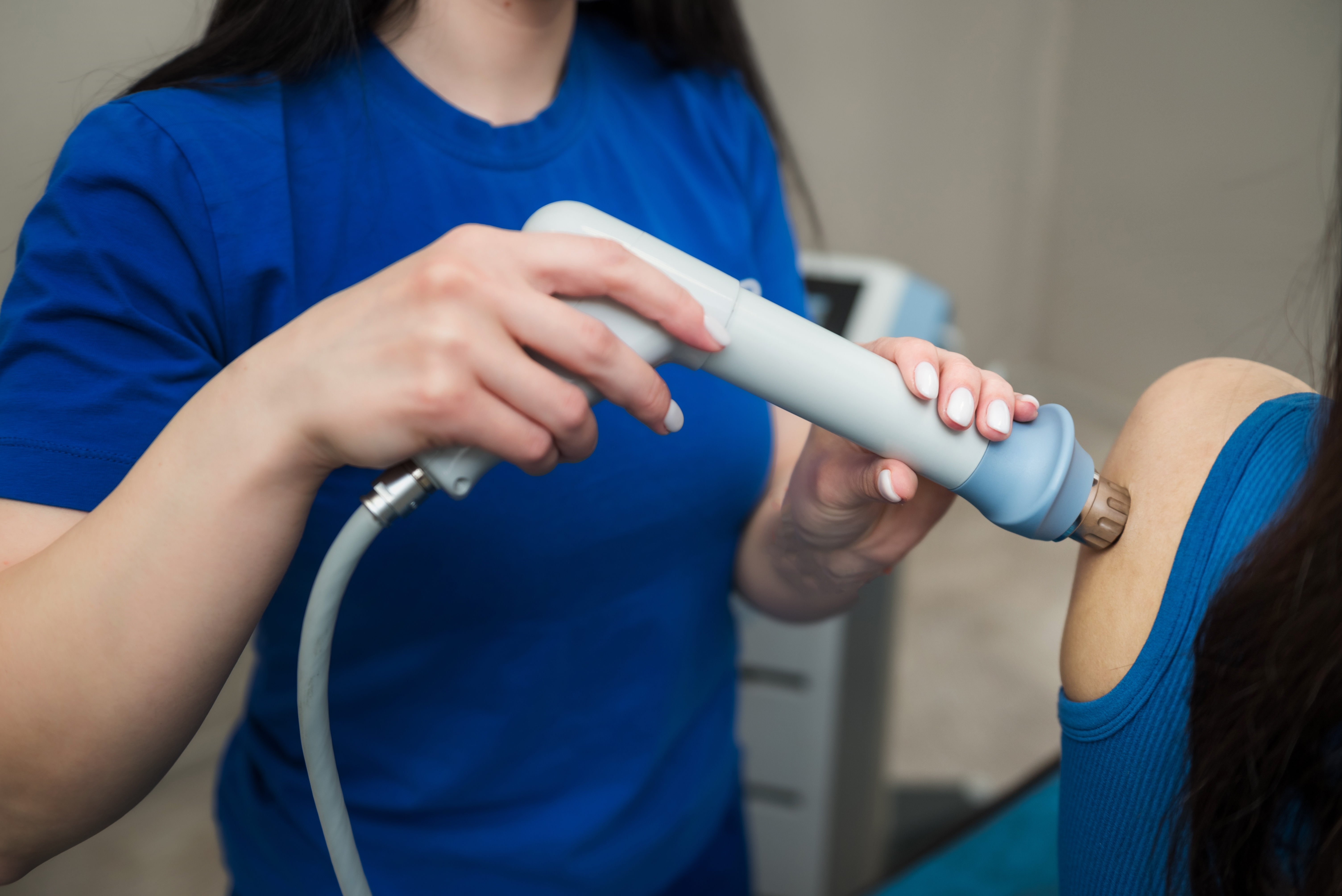
A handheld device is applied to the skin over the affected region
The device delivers a series of controlled sound waves—many people describe the sensation as similar to a rapid-tapping deep massage, or an intense pressure that feels tolerable but tender, like a ”good hurt” that feels like working out a knot
The shockwave portion of treatment lasts around 1-2 minutes, as part of a longer appointment
You may feel some acute soreness afterward, but most people experience an immediate improvement in pain and range of motion
There’s no recovery period after each session. Most people return to their regular activities right away. Some mild bruising or temporary soreness can occur, which your chiropractor will discuss with you beforehand.
Shockwave therapy is a versatile tool that may help make low back discomfort easier to manage early in your treatment plan. This can make it easier to build on your rehabilitation plan with exercises and long-term movement habits. A chiropractor can incorporate shockwave therapy into a personalized plan to address both the pain and what may be contributing to it.
Talk to a Lifemark chiropractor about whether shockwave therapy is right for you.
Key takeaways
- Lower back pain is extremely common — but common doesn't mean you have to live with it
- Shockwave therapy may help target irritated soft tissue and tension that can contribute to low back pain
- Chiropractors look beyond the pain itself to find what’s driving it and build a plan around you
- Combining shockwave with acupuncture, exercise, and manual therapy can support a more complete treatment plan
- Results vary, but many people notice improvement over a short course of treatment
FAQs
Can shockwave therapy help lower back pain?
Yes, shockwave therapy can help when soft tissue irritation, muscle tension, localized tenderness, or ligament sensitivity are contributing to your symptoms. A chiropractor can assess whether it’s the right fit for you.
How many shockwave sessions do I need for lower back pain?
Most people notice a difference after each session. Chiropractors generally assess progress after about three appointments and adjust the plan from there.
Does shockwave therapy hurt?
Many people describe the sensation as similar to a rapid-tapping deep tissue massage—an intense pressure that can feel tender but manageable. Some mild soreness or bruising can occur after treatment, which your chiropractor will explain beforehand.
What causes lower back tension and stiffness?
Common causes include muscle strain from lifting or twisting, prolonged sitting, disc-related issues, deep ligament injuries, and inflammation from overuse or injury.
Is shockwave therapy a non-invasive treatment option for lower back pain?
Yes, shockwave therapy is considered a non-invasive treatment. It does not involve needles or surgery. It uses sound waves applied to the skin’s surface to support healing deep within the tissue.
What if I’ve already tried rest and pain medication?
Rest and medication can help manage short-term discomfort, but they may not address movement patterns, soft tissue irritation, or other factors contributing to your pain. Shockwave therapy, as part of a chiropractic treatment plan, may help support recovery when paired with exercise, education, and hand-on care.
How long does lower back pain last?
Back pain can resolve in as little as two weeks, but symptoms sometimes persist for up to two months or longer. If your pain hasn’t improved, keeps coming back, travels down your leg, or affects your daily activities, it’s worth getting it assessed—especially before it becomes a chronic issue.