
3 exercises for hiking: build strength, balance, and endurance for the trail
Hiking can be a rewarding way to stay active, but uneven trails, steep climbs, and rocky descents can place extra demands on your legs, ankles, and balance. You might start the day feeling strong, then notice fatigue building as the path shifts from flat ground to rocks, roots, or a steady climb. Those trail demands require muscular strength, stability, balance, and endurance. Without the right preparation, you can help support your body for climbs, descents, and changing trail conditions. Strength training is important for hiking because it helps support muscle endurance, joint stability, balance, and core balance.
Why building strength for hiking matters
Exercises that mimic common movements in hiking can help build stability and endurance in your legs, hips, ankles, and core for long or more strenuous hikes. Training can also help reduce the risk of injury, so you can continue enjoying the trails all season long.
Strong glutes, legs, and stabilizer muscles help support your joints and balance as you move. These muscles work together to help you stay steady when stepping over roots, climbing rocks, or navigating loose ground.
3 strength exercises for hiking
The following exercises target muscles commonly used during hiking. They mimic movements you may encounter on both flat and challenging trails.
1. Dumbbell forward lunge or walking lunges
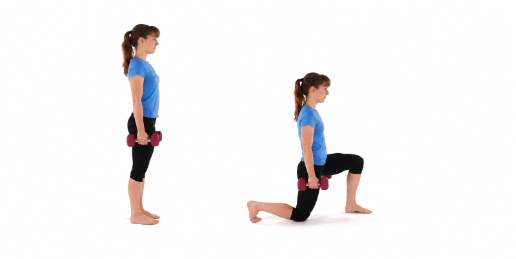
Walking lunges are effective leg exercises for hiking because they challenge strength, balance, and coordination.
How to do it:
- Hold light dumbbells that you can control comfortably
- Step forward into a lunge, with your front knee in a 90-degree angle ahead of you, and you back knee at a 90-degree angle behind you
- Push through your front foot and continue walking forward
- Complete 6-8 reps per leg
- Perform 2-3 sets
This movement can help prepare your body for climbing and stepping over obstacles.
2. Single-leg calf raises
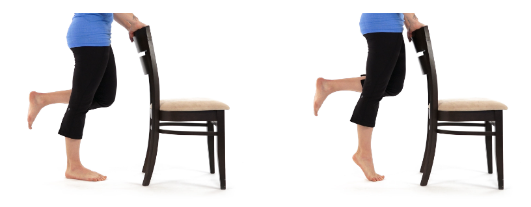
Your calves play an important role when hiking uphill and downhill. Strong calves can help support ankle strength, control, and stability as you navigate changing terrain.
How to do it:
- Stand on one leg
- Raise your heel off the ground
- Slowly lower back down
- Complete 10-15 reps per leg
- Perform 2-3 sets
Strong calf muscles can help support stability when walking on uneven surfaces.
3. Step-up with knee drive
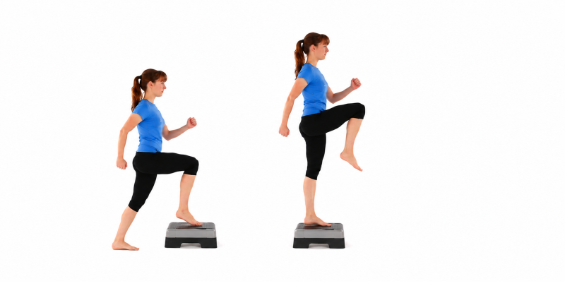
Step-ups closely resemble the movement used when climbing hills, rocks, or stairs. Many people consider them among the best exercises for hiking uphill.
How to do it:
- Step onto a sturdy platform or step
- Drive the opposite knee upward
- Return to the starting position with control
- Use body weight or light dumbbells
- Complete 6-8 reps per leg
- Perform 2-3 sets
This exercise challenges balance, coordination, and lower-body strength.
Tips for hiking safely
Strength training is only one part of trail preparation. A few simple habits can help make your hikes more enjoyable and comfortable.
Before heading out, remember to:
- Stay hydrated and bring enough water
- Pack easy-to-carry snacks for longer hikes
- Wear sunscreen and a hat on sunny days
- Dress appropriately for the weather and trail conditions
- In areas where ticks may be present, wear light colours and tuck in long-sleeve shirts into pants and pants into socks
- Use insect repellent with DEET or Icaridin on exposed skin and clothing, and always follow the label directions
- Choose supportive closed-toe footwear with good traction
- Start with trails that match your current mobility or fitness level and build gradually
Additionally, working with a professional such as a physiotherapist can provide you with specific exercises tailored to your physical needs and hiking goals.
How physiotherapy can help prepare you for hikes
Every hiker has different goals, fitness levels, and experience. A physiotherapist can help you prepare for the demands of hiking by assessing your movement, strength, and balance.
Based on your assessment, they can provide recommendations and exercises designed to support your hiking goals. Whether you’re looking for gym exercises for hiking, balance training, or general conditioning, a personalized plan can help guide your preparation.
Key takeaways
- Trail conditions can change quickly, making strength and stability important for hikers.
- Exercises that mimic hiking movements can help prepare your body for uneven terrain.
- Lunges, calf raises, and step-ups target key muscles used during climbs and descents.
- Good preparation includes both exercise and practical hiking safety habits.
- A physiotherapist can help tailor a program to your hiking goals and activity level.
FAQs
What are the best exercises for hiking?
Lunges, single-leg calf raises, and step-ups with a knee drive are effective exercises because they mimic common hiking movements.
Are hiking exercises for beginners different?
Many beginners start with simple strength and balance exercises that build confidence and stability before progressing to more challenging activities.
Why are balance exercises for hiking important?
Balance exercises can help improve stability on uneven terrain and support safer movement on trails.
What are good ankle strengthening exercises for hiking?
Single-leg calf raises are a simple exercise that targets muscles around the ankle and lower leg.
What are the best exercises for hiking uphill?
Step-ups with a knee drive are often used because they closely mimic climbing movements.
What are the best exercises for hiking downhill?
Exercises that improve lower-body strength and control, such as lunges and step-ups, can help prepare you for downhill sections.
Can a physiotherapist help me prepare for hiking?
A physiotherapist can conduct an assessment and provide recommendations and exercises based on your health needs and hiking goals.