
5 beginner strength exercises for seniors: how to start safely
Starting strength training later in life can feel intimidating. You may wonder which exercises are safe, whether you need equipment, or how to begin if you have never followed a structured routine before.
The good news is that getting started does not have to be complicated. For many seniors, the best place to begin is with simple exercises that build strength, mobility, balance, and body awareness. We spoke with Lifemark kinesiologist Elisa Hemmati about where to start, which beginner exercises can help, and how to build from the basics safely.
How should seniors start strength exercises safely at home?
When people think about strength training, they often picture dumbbells, machines, or advanced gym routines. But for many seniors, the safest and most useful place to begin is much simpler than that.
It may start with bodyweight exercises. It may start with gentle mobility work. It may start with learning how to move with more control before adding more challenge.
“We start with the basics: stretches, bodyweight exercises,” Elisa says.
Before worrying about intensity, reps, or equipment, the first priority should be:
- proper form
- movements that feel manageable
- consistency
- gradual progression
Elisa also looks at body awareness early on. “We assess if you have good body awareness or proprioception,” she says. That foundation can affect how safely and confidently someone moves through each exercise.
How often should seniors do beginner strength exercises?
For many seniors, 2 to 3 sessions per week can be a realistic place to start. Sessions do not need to be long to be worthwhile.
“It doesn’t have to be long,” Elisa says. “It would be nice if you could pair it with a long walk, a swim, or some other cardio. Just be active every day.”
That is a useful way to think about it. Strength work can be one part of a broader routine, rather than something that has to stand on its own. Short, manageable sessions are often a better starting point than trying to do too much at once.
5 exercises to help build strength safely
The exercises below are beginner-friendly examples that can help support strength, mobility, balance, and body control. They are not a one-size-fits-all plan, but they can offer a practical place to start.
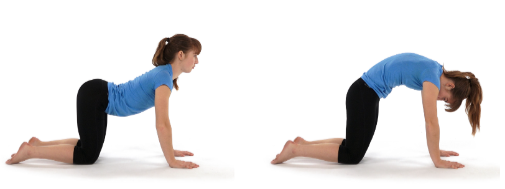
1. Spinal mobility
Mobility exercises can help warm up the body, improve flexibility, and increase awareness of how the spine moves before progressing into strength work.
Examples of mobility exercises for seniors may include:
- cat-cow
- cobra pose
- child’s pose
How to do cat-cow
- Start on your hands and knees in a neutral position.
- Keep your neck in line with your spine.
- Inhale as you gently arch your back and look slightly ahead.
- Exhale as you slowly round your spine and bring your gaze toward your belly.
- Return to neutral and repeat for 8 to 12 reps.
As you progress, you can add more sets with rest in between.
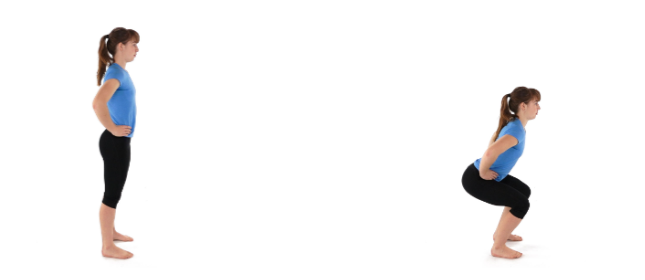
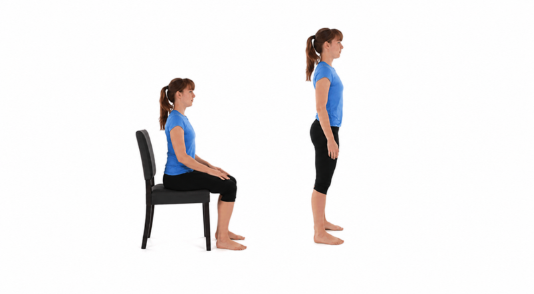
2. Sit-to-stands or bodyweight squats
This movement supports one of the most common daily movement patterns: sitting down and standing back up.
How to do bodyweight squats
- Stand with your feet about shoulder-width apart.
- Lower yourself as if you are about to sit into a chair.
- Keep your chest lifted and your back neutral.
- Push through your heels to return to standing.
- Repeat for 8 to 12 reps for 2 to 3 sets.
If needed, hold onto a sturdy chair in front of you for light support.
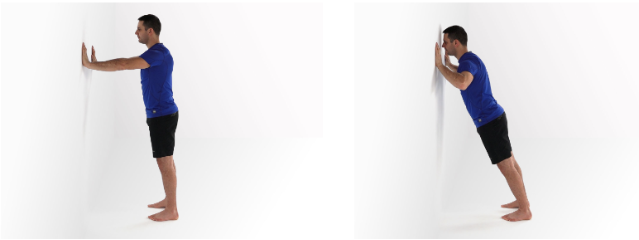
3. Wall push-ups
Wall push-ups are a beginner-friendly way to build upper body and core strength without the intensity of floor push-ups.
How to do wall push-ups
- Stand about an arm’s length from a wall.
- Place your palms on the wall at shoulder height.
- Bend your elbows and lower your upper body toward the wall.
- Push through your palms to return to standing.
- Repeat for 8 to 12 reps for 2 to 3 sets
If there is pain or discomfort, stop and get guidance from a kinesiologist or physiotherapist.
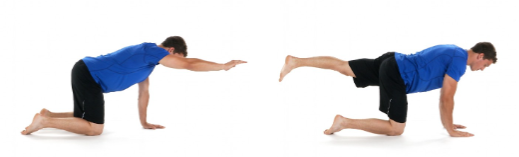
4. Bird-dog
Bird-dog helps build core strength, posture, coordination, and body control.
How to do bird-dog
- Start on your hands and knees.
- Gently engage your core.
- Lift one arm and lower it back down.
- Lift one leg and lower it back down.
- Repeat on the other side.
- Repeat for 8 to 12 reps, 2 to 3 times.
As you progress, lift the opposite arm and leg at the same time.
Exercises like this can also challenge coordination and focus. Elisa says, “We often try exercises like the ‘dead-bug’ so clients have to think to recall the steps. This keeps their minds engaged.”
5. Split squat
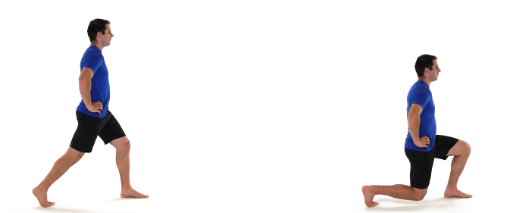
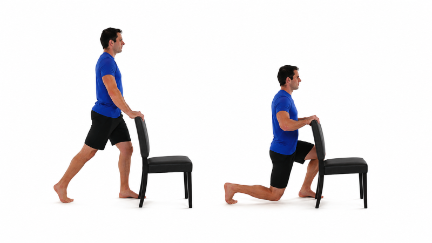
Split squats can help build leg strength and balance, especially for movements that require more control through the lower body.
How to do split squat
- Step one foot forward and keep the other behind you.
- Bend both knees into a controlled lunge position.
- Lower only as far as feels comfortable.
- Push through the front heel to return to standing.
- Repeat on each side for 8 to 12 reps.
If this feels too advanced, start with sit-to-stands or supported squats first.
How should seniors progress beginner strength exercises?
A safer approach is to build slowly over time, increasing difficulty only when your body is ready.
Building strength safely may mean:
- improving your form first
- increasing reps gradually
- adding another set
- shortening rest time slightly
- progressing to a more challenging variation only when you feel ready
Proper form should come before intensity. A simpler exercise done well is often more useful than a harder one done poorly.
How do you know if an exercise is too difficult?
Beginner exercises should feel challenging, but manageable. You should still feel in control of the movement.
Signs an exercise may be too difficult include:
- sharp pain
- loss of balance
- holding your breath throughout the movement
- rushing to get through reps
- poor control or unstable form
If that happens, it may be a sign to reduce the range of motion, add support, choose an easier variation, or get professional guidance.
When should seniors get help starting strength exercises?
Some seniors feel comfortable starting with simple exercises at home. Others feel unsure about form, pain, balance, or what level is appropriate for them.
A kinesiologist may be helpful if:
- you are new to exercise
- you feel unsteady
- you have pain with movement
- you are not sure whether an exercise is right for you
- you want a plan tailored to your body and goals
Elisa’s process starts with understanding the person, not just the movement. “We take a really good history,” she says. Her common questions include: “What’s your exercise background? What are your current problems and, most importantly, what are your goals? Is your goal to be independent?”
That kind of assessment helps make sure the starting point is realistic and safe.
At Lifemark, a kinesiologist can help guide you through beginner exercises, correct your form, and build a program that progresses safely over time.
Support may include:
- understanding your movement patterns
- choosing exercises that match your current ability level
- building body awareness
- helping you progress gradually
- creating a plan you can realistically maintain
The goal is not just to hand you exercises. It is to help you build a foundation you can keep using.
Beginner strength support for seniors at Lifemark
Starting strength training does not have to mean jumping into an intimidating routine. Often, it begins with a few simple movements, a better understanding of your body, and a plan that feels realistic.
If you want support getting started safely, a Lifemark kinesiologist can help you begin with a plan tailored to your mobility, balance, and goals.
Ready to get started? Book an appointment with a Lifemark kinesiologist today.
Key takeaways
- Beginner strength exercises for seniors do not need to be complicated.
- Mobility work and bodyweight exercises can be a strong place to start.
- Many seniors can begin with 2 to 3 sessions per week.
- Proper form and gradual progression matter more than intensity.
- A kinesiologist can help create a safe and realistic starting plan.
FAQs
What are good beginner strength exercises for seniors?
Common starting exercises may include spinal mobility work, sit-to-stands, bodyweight squats, wall push-ups, bird-dog, and split squats, depending on the person.
Can seniors start strength training at home?
Many can, especially with simple bodyweight movements that match their current ability level and are done with good form.
How often should seniors do beginner strength exercises?
Many seniors can benefit from doing strength exercises 2 to 3 times per week, with rest days between sessions.
Do seniors need weights to start strength training?
Not always. Many beginners start with mobility and bodyweight exercises before progressing further.
What if I have never exercised before?
You can start exercising at any age. The key is beginning at the right mobility level and building gradually.
When should I see a kinesiologist?
It can help to see a kinesiologist if you have pain, balance concerns, limited mobility, or want guidance starting safely.