Treadmill truths: physiotherapist busts 5 myths about indoor running

For many runners, the treadmill is a tool of convenience, especially when Canadian weather makes outdoor runs unpredictable. Yet, it’s surrounded by debate and strong opinions. Is it an inferior workout? Will it ruin your knees?
Treadmill running is a valuable training tool that, when used correctly, can be just as effective—and in some cases, more effective—than running outdoors. To separate fact from fiction, we need to look past the myths and focus on the mechanics of a good run.
To help us do just that, we spoke with Lifemark physiotherapist Karen Tyssen. With her expertise in helping runners of all levels, she helped us debunk the most common treadmill myths and shared how you can use this machine to become a stronger, more efficient runner.
Meet our physiotherapist, Karen Tyssen
Karen Tyssen is a physiotherapist at Lifemark who specializes in guiding athletes through injury recovery and performance improvement. She believes that understanding the “why” behind movement is key to preventing injuries and achieving your goals. Karen regularly works with runners to refine their form, build strength, and create sustainable training habits, whether they run on the road or on the treadmill.
Book an appointment with a Lifemark physiotherapist
Myth #1: running on the treadmill is a less effective workout
Picture this: you’re on the treadmill for an easy jog at zero incline. Compared to an outdoor run with hills, turns, and wind, it certainly feels easier. But that’s not the full story.
“If you’re doing a workout where you’re creating increased speeds or increased incline, you can make it just as challenging, if not more challenging,” Karen explains.
The treadmill gives you complete control. If you’re training for speed, you don’t have to worry about stopping at a traffic light in the middle of an interval. That control allows for a more focused, intense, and predictable workout, which is a significant advantage when the weather is poor or you’re short on time.
Myth #2: treadmills are bad for your knees
This is perhaps the biggest myth of all. The belief that the hard, repetitive surface of a treadmill is uniquely damaging to knees and other joints is widespread, but the opposite is often true.
A quality treadmill has a cushioned deck designed to absorb impact. This means the ground reaction force—the shock that travels up your leg with each foot strike—is less than it is on hard pavement or concrete. The real key to protecting your joints isn’t the surface you run on; it’s how you run.
Myth #3: treadmill running weakens your hamstrings
You may have heard that the treadmill’s moving belt does the work for you, meaning your hamstrings don’t have to engage. There is a grain of truth here.
“On a treadmill, the belt is pulling back, whereas on an outdoor run, your hamstrings are pulling your heel back towards your bum,” says Karen. This means there is typically less load on the hamstrings when running on a flat treadmill.
The fix is simple: add an incline. Karen recommends setting the treadmill to at least a 1-2% incline to better simulate outdoor running and increase the activity of your hamstrings. The incline forces you to lift and drive, compensating for the belt’s assistance.
Myth #4: you can’t train for an outdoor race on a treadmill
Yes, you absolutely can. The treadmill is an excellent tool for building the cardiovascular fitness needed for any race, from a 5K to a marathon. It allows you to dial in at specific paces for tempo runs and interval training without interruptions.
However, there’s an important consideration. Because the treadmill is lower impact, your body needs to get used to the higher forces of running on pavement.
“If you’re suddenly going to run a marathon and all you’ve done is treadmill running, it might be a bit of a shock to your system,” Karen advises. She recommends incorporating a few outdoor runs into your training plan, especially as race day gets closer, to ensure your body is prepared for the specific demands of the road.
Myth #5: you should focus on a longer stride
Many running injuries are linked to over-striding, which is taking steps that are too long. “Over-striding is not a good thing,” Karen notes. “Taking longer steps than necessary increases stress and load on the tissues.”
Instead of focusing on lengthening your stride, focus on your cadence—the number of steps you take per minute. A faster cadence naturally encourages a shorter stride, causing your foot to land more directly underneath your body.
“When you have a faster turnover, you have less time where your body is actually in contact with the ground” Karen explains. “There is less stress on the tissue and less risk of injury.” A good target to aim for is 180-190 steps per minute, which you can track with a running watch or a simple metronome app. Running on a treadmill can help you maintain your cadence in a way that is safe for your joints and supports your running form.
Your treadmill safety checklist
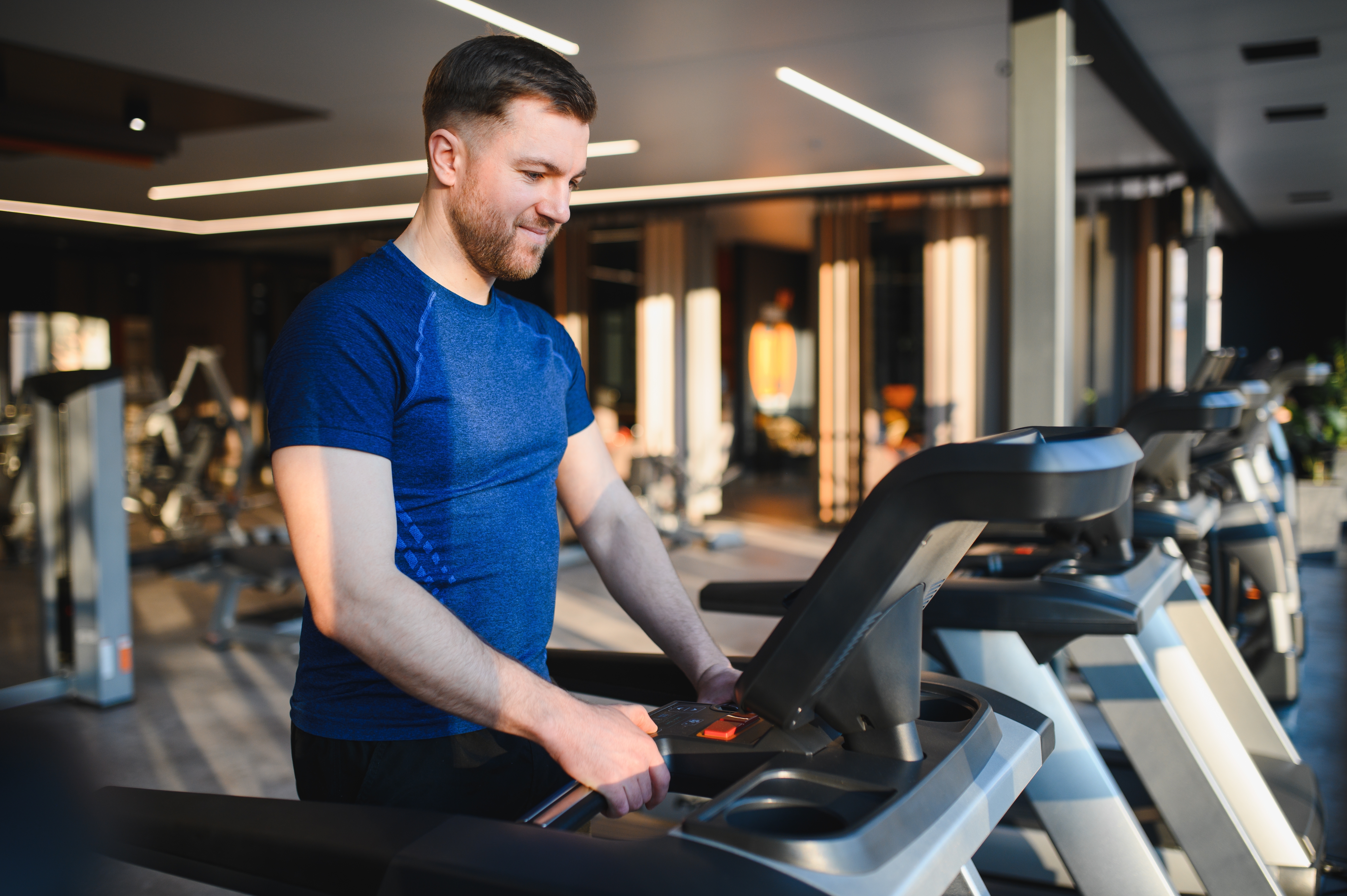
Whether you are training for your next race or simply looking to improve your cardiovascular fitness, the treadmill can be a safe tool to help you reach your goals. Here’s how to use the treadmill safely and effectively every time you step on:
- Use the safety clip. Especially if you are new to the treadmill, attach the safety clip to your clothing. It’s a simple step that can prevent serious injury if you slip or fall.
- Be mindful when getting on and off. Always step onto the treadmill first, then start the belt at a slow speed. Never jump onto a moving belt. Reduce distractions when you’re getting on or off.
- Check your laces. A loose shoelace can easily get caught in the belt. Do a quick double-knot before you start.
- Give yourself space. Position your treadmill so that the back of it is not against a wall. This ensures that if you do fall, you won’t be trapped between the moving belt and the wall.
- Create a safe environment. If you have small children or pets at home, ensure they are kept out of the room when you are running and that the safety key is stored out of reach.
The treadmill doesn’t have to be a last resort. By understanding how it works and how to use it correctly, you can turn it into one of the most powerful tools in your training toolkit.
If you’re looking to improve your running form or recover from an injury, our physiotherapists can help.
Key takeaways
- Treadmills offer a lower-impact running surface than pavement, which can be beneficial for joint health.
- You can make a treadmill workout just as challenging as an outdoor run by using incline and speed to control the intensity.
- Focusing on a faster cadence (shorter, quicker steps) is more important for injury prevention than trying to lengthen your stride.
- The treadmill is an excellent tool for race training, but it’s important to mix in some outdoor runs to prepare your body for the specific impact of pavement.
- Simple safety measures, like using the safety clip and being mindful when getting on and off, are crucial for an injury-free treadmill session.
FAQs
What incline should I use on a treadmill to mimic running outside?
A 1-2% incline is generally recommended to compensate for the lack of wind resistance and better simulate the effort of running on a flat outdoor surface.
Is it bad to hold onto the handrails while running on a treadmill?
Yes, holding the handrails can negatively affect your running form, reduce your core engagement, and lead to an inaccurate calorie burn reading. It’s best to let your arms swing naturally as they would outdoors.
How can I make treadmill running less boring?
To combat boredom, try listening to music, podcasts, or audiobooks. You can also use training apps with guided workouts, or run alongside a friend at the gym.
Should I change my foot strike for treadmill running?
No, you shouldn’t drastically change your natural running form, such as forcing a forefoot strike if you are a natural heel striker. Doing so can increase your risk of injuries like Achilles tendonitis or plantar fasciitis. Instead, focus on improving your cadence.