
7 exercises to help prevent golf injuries and keep you playing
You finally get out to the course after a long week. You’re a few holes in, feeling good—and then your lower back tightens up. Sound familiar? An injury can happen to any player at any level, and they’re more common than most people expect.
Targeted exercises can help prevent a golf injury by building strength, mobility, and stability, while reducing the risk of re-injury so you can keep doing what you love.
How do golf injuries happen?
Golf injuries are usually caused by one of two things: overuse or poor swing mechanics.
Repetitive swinging puts stress on the same muscles, joints, and tendons round after round. Over time, that adds up, especially if you jump back into a full season without building up gradually.
Swing mechanics also play a big role. Gripping the club too tight, not bending your knees, or rounding your back can all increase the load on vulnerable areas. Small habits, repeated hundreds of times, can lead to real problems.
What are common golf injuries?
Golf injuries can affect anyone, from beginners to seasoned players. The most common areas include:
- Low back. This is the most common injury site for golfers. During a golf swing, the lumbar spine experiences unequal compression, shear, and rotational forces. Those compression loads can reach up to 8 times your body weight. That’s a significant amount of stress on your spine with every swing.
- Shoulder. Your shoulder muscles need to work together throughout the entire swing. Pain often shows up in the lead shoulder at the top of the backswing or at the end of the follow-through. Shoulder injuries are especially common with high volumes of play.
- Elbow. Despite its name, tennis elbow (lateral epicondylitis) is a condition that commonly affects the lead elbow in golfers. Golfer’s elbow (medial epicondylitis) is less common and tends to affect the trailing arm.
- Wrist. The lead wrist is vulnerable to overuse injuries like tendinitis. Injury can also happen from sudden impact like hitting the ground, an artificial mat, a rock, or thick grass, particularly when the club is gripped too tightly.
Note: The exercises and stretches in this article are not intended to replace the advice of your clinician. If you are unsure, please speak to your clinician before attempting any of the suggestions below.
Try these 7 moves to help prepare your body for the course
Exercises that improve strength, mobility, and stability can help reduce the risk of common golf injuries. It is important to address and strengthen all areas involved when playing golf.
Low back exercises
1. Supine trunk rotation
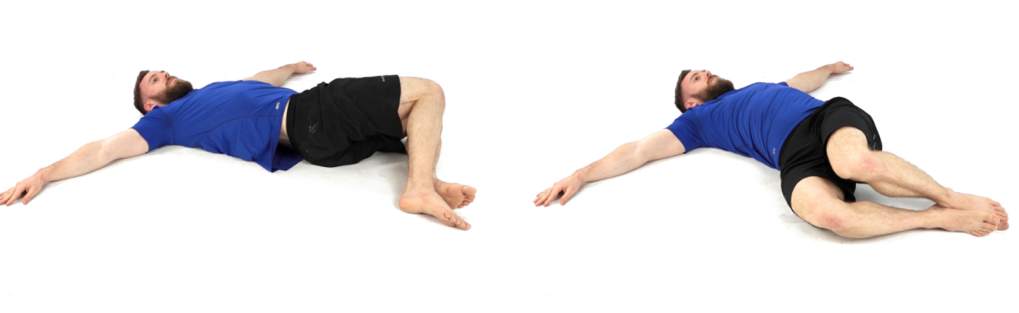
- Lie on your back with your arms in a “T” position, your feet flat on the floor, and your knees together.
- Slowly let both knees fall to one side and hold for 3 seconds.
- Slowly bring your legs back to centre.
- Repeat 5 times on each side.
2. Side plank
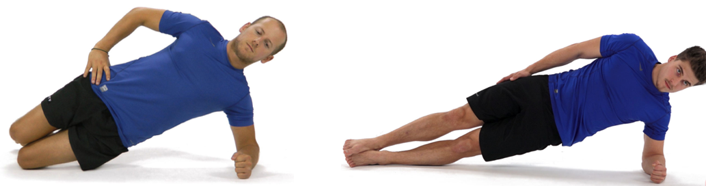
- Lie on your side with your legs bent and in line with your body.
- With your upper body supported on your elbow, ensure your elbow is under your shoulder.
- Lift your hip off the floor until your body is aligned.
- Hold for 30 seconds and repeat 3 times on each side.
- You can straighten your legs to increase difficulty or add a torso rotation by reaching under your body with your top arm as you hold the plank position.
3. Bird dog
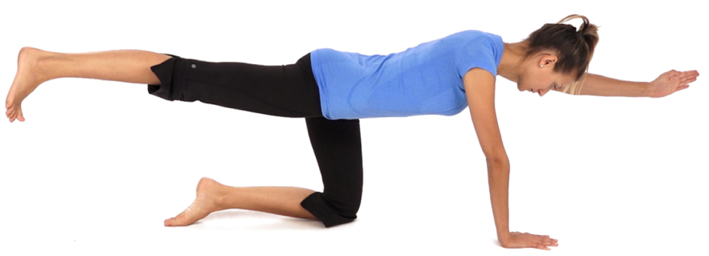
- Begin on your hands and knees, with your knees under your hips and your hands under your shoulders.
- Maintain your spine in neutral (naturally arched, chin tucked in).
- Tighten your abdominals as you reach in front of you with your left hand and extend your right leg.
- Slowly lower your leg and arm back to the starting position.
- Repeat 5 times on each side.
Shoulder exercises
4. Shoulder abduction and external rotation
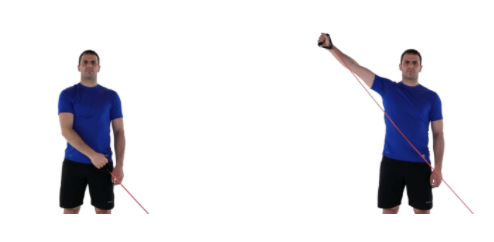
- Tie one end of a resistance band to a stable surface at floor level on the opposite side of your working arm.
- Stand holding the other end of the band with your arm crossed over your body, palm facing in towards the opposite hip.
- Pull the band up, across, and away from your body in a diagonal motion.
- Rotate your arm as you pull so that your palm is facing forward at the end of the movement.
- Slowly return to the starting position and repeat 10 times on each side.
5. Shoulder adduction and internal rotation
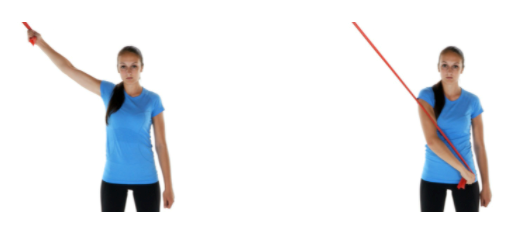
- Tie one end of a resistance band overhead on the same side as your working arm.
- Stand holding the opposite end of the band with your palm facing forward.
- Pull the band down across your body towards the opposite hip.
- Rotate your arm as you pull so that your palm is facing towards your body at the end of the movement.
- Slowly return to the starting position and repeat 10 times on each side.
Elbow and wrist exercises
6. Wrist flexion
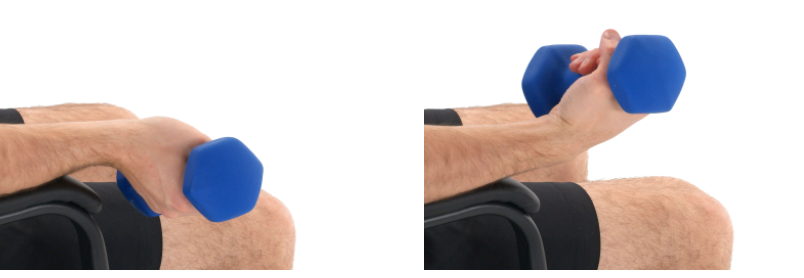
- Place your forearm along an armrest or table with your wrist hanging over the edge and palm facing up.
- With a weight or band in your hand, flex your wrist and lift your hand towards the ceiling for a count of 2 seconds.
- Slowly lower for 4 seconds and repeat 10 times on each wrist.
7. Wrist extension
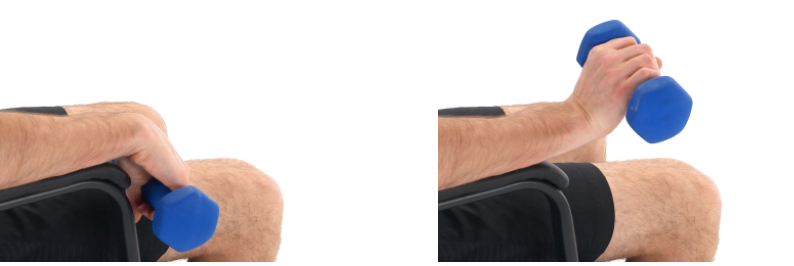
- Place your arm in the same position as above, but with your palm facing down.
- With a weight or band in your hand, extend your wrist and lift your hand towards the ceiling for a count of 2 seconds.
- Slowly lower for 4 seconds and repeat 10 times on each wrist.
Every golfer moves differently. A Lifemark physiotherapist can help assess your strength, mobility, and movement patterns to recommend a personalized plan that helps you manage discomfort, reduce injury risk, and feel more prepared for the course.[See a physiotherapist]
Tips to help prevent golf injuries
Exercises are one piece of the puzzle. These habits can also help improve recovery and support your game:
- Start slow. If you’ve been off the course all winter, ease back in. Gradually increase how many rounds or holes you play each week.
- Warm up dynamically. Before you tee off, move your body through its range of motion. Dynamic stretches—like hip circles, arm swings, and trunk rotations—help prime your muscles for activity.
- Loosen your grip. A death grip on the club increases stress on your wrists and elbows. Hold the club firmly, but not tightly.
- Check your posture. Keep your knees slightly bent and your back straight through your swing. Small technique adjustments can reduce strain significantly.
- Cool down with stretches. After your round, gentle static stretching can reduce stiffness and support recovery.
- Stay hydrated. Dehydration can affect muscle function and concentration. Drink water throughout your round, even on cooler days.
- Limit direct sun exposure. If you’re playing in the summer heat, drink water more often, wear a hat, use sunscreen, and take breaks in the shade when possible.
How can physiotherapy help treat a golf injury?
If you’re dealing with golf and back injuries, shoulder pain, or elbow and wrist issues that aren’t improving, physiotherapy may help.
A physiotherapist will conduct a thorough assessment to understand what’s happening and why. From there, they can provide hands-on treatment, recommend targeted exercises, and help you modify your game so you can recover without stopping play altogether.
Imagine finally getting through 18 holes without wincing at hole 7. That’s the kind of outcome physiotherapy is designed to support. It can help address pain, improve mobility, and build strength, so your body feels better prepared for the demands of the course.
Key takeaways
- Golf injuries can happen at any age or skill level, and are often caused by overuse or poor swing mechanics.
- Low back pain is the most common golf injury, followed by shoulder, elbow, and wrist issues.
- Exercises targeting strength, mobility, and stability in these areas may help reduce your risk of injury.
- Simple habits like loosening your grip, warming up properly, and building up your play gradually can make a real difference.
- If you’re dealing with persistent pain, a physiotherapist can assess your movement and support your recovery.
FAQs
What are the most common golf injuries?
The most common golf injuries affect the lower back, shoulder, elbow, and wrist. Low back pain is the most frequent, largely due to the rotational stress of the golf swing.
Can golf cause back injuries?
Back pain is one of the more common concerns golfers may experience. Each swing puts compressive, shearing, and rotational forces on the lumbar spine — up to 8 times your body weight. Exercises that strengthen the core and improve spinal mobility may help reduce this risk.
Are shoulder injuries common in golf?
Shoulder injuries are common, particularly in the lead shoulder. Strengthening the shoulder muscles can improve joint stability and may lower your risk.
What exercises help prevent golf injuries?
Exercises like supine trunk rotation, side plank, bird dog, shoulder band work, and wrist flexion and extension are designed to support the areas most affected by golf. Focus on strength, mobility, and stability.
How can I prevent golf injuries without stopping play?
Easing into the season gradually, warming up with dynamic stretches, using good body mechanics, and loosening your grip can all help reduce strain on your body. A targeted exercise routine off the course can also support strength, mobility, and control. If you have recurring discomfort or want a plan based on how you move, a physiotherapist can assess your needs and recommend exercises and strategies to help you stay active on the course.
When should I see a physiotherapist for a golf injury?
If you have pain that persists beyond a day or two, keeps coming back, or affects your swing or daily life, it’s worth booking an assessment. A physiotherapist can identify the cause and help you address it before it becomes a bigger problem.
Can physiotherapy help me get back to golf after an injury?
A physiotherapist can assess what’s happening, provide treatment, and guide you through a recovery plan, including a gradual return to play so you can get back on the course with confidence.