Concussions 101: causes, symptoms, and recovery
Recognizing and properly managing a concussion is essential to ensure safe recovery. Although symptoms vary from person to person, a concussion can impact the whole body, leading to physical, mental, and emotional effects. Early detection and treatment can help those affected return to activity safely.
Curious how to recognize a concussion when it happens? Read on to learn more about how to identify a concussion and how a gradual return to activity can support long-term recovery. This article explores key messages from the webinar, Concussions 101: causes, symptoms, and recovery.
Understanding concussions: what they are and who’s most at risk
Concussions are a mild traumatic brain injury that occurs when there is a bump, jolt, or blow to the head or force to the neck that is transferred to the head. The result is a decreased responsiveness of brain cells leading to an array of symptoms people experience post-injury. Concussion symptoms typically occur 24-48 hours following the injury and can resolve on their own within 72 hours. An assessment by a healthcare provider can help ensure recovery is safe and properly managed.
While common in sports, with an estimated 25% of concussions occurring during sporting activities, anyone can sustain this injury. In sporting activities, females are more prone to concussions and are more likely to be injured through contact with the playing surface or equipment compared to males who are more likely to be injured via player-to-player contact. Concussions aren’t limited to sports. From falls in seniors to motor vehicle accidents, anyone can sustain a concussion.
Common symptoms of a concussion
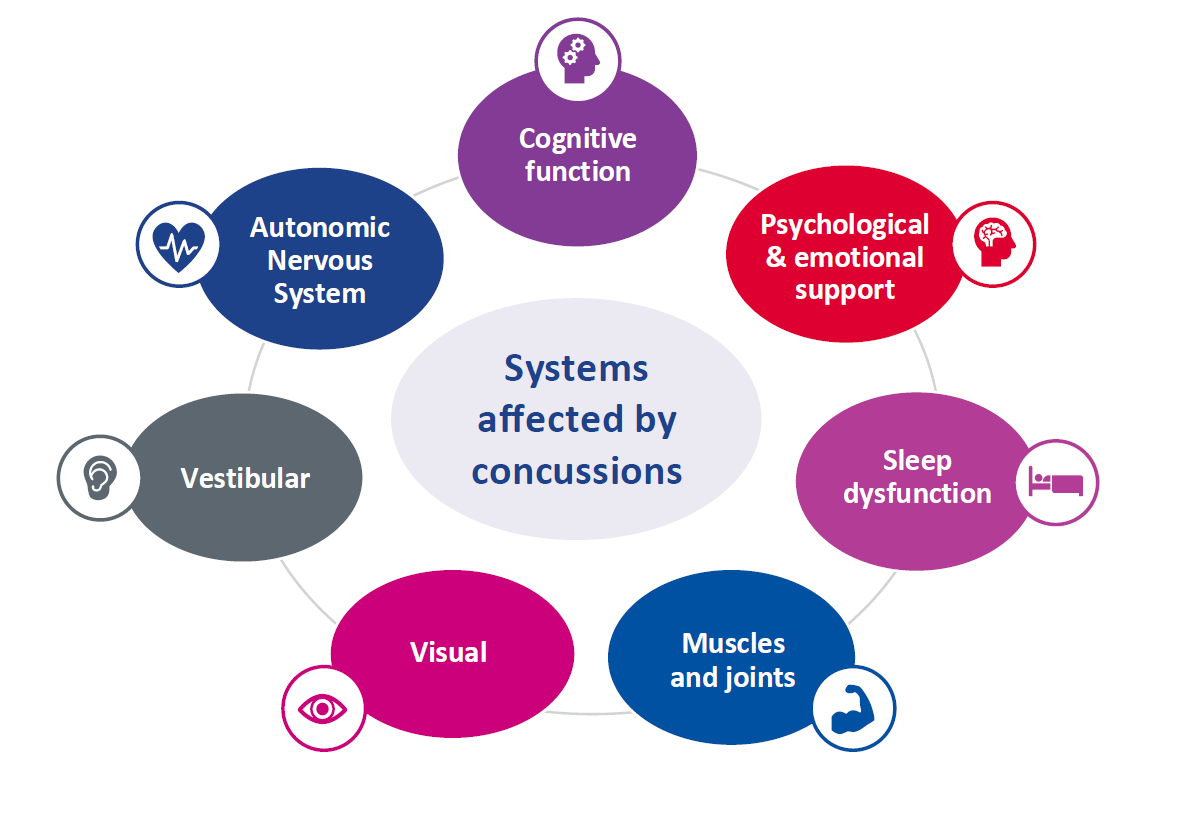
Concussions affect the whole body, and no two concussions are the same. From the visual system to how our joints and muscles function, symptoms of a concussion can be experienced in a variety of ways.
Common symptoms include:
- Memory and concentration difficulties, trouble with word finding
- Headaches
- Fatigue
- Nausea and vomiting
- Dizziness
- Mental health changes impacting mood and emotions
- Sensitivity to noise
- Visual disturbances including blurred or double vision and light sensitivity
- Reduced balance and coordination
- Sleep disturbances
Questions to ask someone if you suspect they had a concussion
At a loved one’s sporting event and suspect they may have a concussion after an injury?
By addressing physical symptoms, changes in emotions and thinking patterns, and altered awareness, the Concussion Recognition Tool (CRT6) helps identify concussion injuries in children, adolescents, and adults.
Consider the following questions to assess awareness:
- “Where are we today?”
- “What event were you doing?”
- “Who scored last in the game?”
- “What team did you play last week/game?”
- “Did your team win the last game?”
In addition to physical symptoms, other clues that suggest a concussion has occurred include:
- Loss of consciousness or responsiveness
- Lying motionless on the playing surface
- Falling unprotected on the playing surface
- Disorientation or confusion
- Seizure, fits, or convulsions
- Slow to get up after a direct hit to the head
- Unsteady on the feet
- Facial injury
How long do concussions last?
Many symptoms of a concussion typically resolve in 72 hours, and most people recover fully within a few weeks. Up to 90% of adults fully recover within two weeks, and up to 80% of children show improvement in symptoms within one to three months.
What if my concussion symptoms won’t go away?
While most concussion injuries recover in a timely matter, nearly one third of adults experience prolonged symptoms for varying lengths of time. Though not fully understood, factors that have been linked to prolonged recovery include:
- Fatigue/fogginess and immediate onset of headache or dizziness, amnesia, disorientation, or mental status changes after an injury
- Persistent cognitive impairment
- A history of concussion injuries
- A history of migraines
Returning to activity after a concussion

Early assessment and care after a concussion are associated with better recovery outcomes.
A gradual return to activity in phases can help ensure a safe return to normal movement levels over the recovery period. Most people can return to “active rest” within 72 hours of injury. For some, this may look like getting out of bed or a dark room and engaging in light activity like going for a walk.
What if symptoms return when I start moving again?
It is common and expected for some symptoms to return while safely implementing more activity. With modifications and staying within tolerable levels of symptoms, the body and brain are able to adapt to gradual increases in activity and exposure.
For someone experiencing a headache each time they are exposed to light, gradual exposure might look like: wearing hats and sunglasses for gradually shorter periods of time to build tolerance to light again.
How a Lifemark physiotherapist can help
Although only medical doctors can provide an official diagnosis of a concussion, early assessment and treatment are still important. A Lifemark therapist can help support your recovery by conducting a thorough assessment of your symptoms, injury, history, mental well-being, and personal health goals. Working with your medical doctor, your care provider will develop a personalized treatment plan with exercises and guidance to help you gradually and safely return to activity.
Key Takeaways
- A concussion is a mild brain injury from a force to the head or neck, affecting brain cell responsiveness.
- Risk factors: Anyone can get a concussion. In sports, females are more prone to concussions, often from contact with surfaces or equipment.
- Symptom onset: Symptoms usually appear 24-48 hours after the injury and can affect the entire body, including physical, cognitive, and emotional functions.
- Common symptoms: Watch for headaches, dizziness, memory difficulties, fatigue, nausea, and sensitivity to light or noise.
- Recovery timeline: Most symptoms resolve within 72 hours. Up to 90% of adults with sports-related injuries recover fully within two weeks.
- Recovery process: A gradual, phased return to activity is key. It’s normal for some symptoms to reappear as activity increases; the goal is to build tolerance without overdoing it.
- Professional help: While only a medical doctor can diagnose a concussion, a physiotherapist can conduct an early assessment and create a personalized treatment plan to guide a safe recovery.
Frequently Asked Questions (FAQ)
What is a concussion?
A concussion is a mild traumatic brain injury resulting from a bump, jolt, or blow to the head or a force to the neck that is transferred to the head. This causes a temporary decrease in the responsiveness of brain cells.
What are the most common symptoms of a concussion?
Common symptoms include headaches, fatigue, nausea, dizziness, memory and concentration difficulties, mood changes, sleep disturbances, and sensitivity to light and noise.
How can I tell if someone might have a concussion?
You can ask them questions to assess their awareness, such as “Where are we today?” or “What event were you doing?” Other signs include loss of consciousness, disorientation, seizures, unsteadiness, or being slow to get up after a hit.
How long does it take to recover from a concussion?
Many symptoms resolve within 72 hours. Most people recover fully within a few weeks. For sports-related injuries, up to 90% of adults recover within two weeks, and up to 80% of children improve within one to three months.
What if my concussion symptoms don’t go away?
While most people recover quickly, nearly one-third of adults experience prolonged symptoms. Factors linked to longer recovery include a history of concussions or migraines, and the immediate onset of severe symptoms like fogginess or amnesia after the injury.
How should I return to activity after a concussion?
A gradual return to activity is recommended, typically starting with light movement like walking within 72 hours of the injury. The goal is to slowly increase activity and exposure (e.g., to light) while staying within tolerable symptom levels, allowing the brain and body to adapt.
If you’re recovering from a concussion, a Lifemark therapist can help support your recovery. Find a location near you to book an appointment online today.