
Why do my knees click? What's normal and when to see a chiropractor
Have you ever noticed your knees making popping, clicking, or cracking sounds when you walk up the stairs, squat down, or even just stand up? You’re not alone. For many, these joint noises can sometimes cause concern. The good news is, most of the time, knee clicks and cracks are completely normal and nothing to be concerned about. However, when these sounds come with pain, swelling, or limited movement, it’s a signal to pay closer attention.
At Lifemark, we believe in empowering you with knowledge about your body. We spoke with Lifemark chiropractor Dr. Omar Pervez, who has over 20 years of experience helping people move better, to understand the truth about noisy knees.
Book an appointment with a chiropractor
Why do my knees make sounds? Understanding knee clicks and cracks
Your knees are complex joints, designed to handle a lot of movement and weight. When you hear a pop or a click, several things could be happening inside. Often, these sounds are simply the result of trapped gas bubbles releasing within the joint fluid, much like the snap or pop sounds you hear when opening a can of soda. This is a common, harmless phenomenon.
Occasionally the sounds come from tendons or ligaments moving over bone or other tissues as your knee bends and straightens. Dr. Pervez notes that if these movements are painless, they are generally not a cause of concern. It’s a normal part of how your body works.
Are knee clicks normal? When knee sounds are harmless
Most knee clicks and cracks are benign. If you hear a noise but feel no pain, swelling, or discomfort, your knees are likely functioning normally. Dr. Pervez emphasizes that “motion is the lotion,” and regular movement helps circulate the synovial fluid, which lubricates your joints and provides nutrients to the area. So, a few cracks might just be your body’s way of saying it’s time to move!
These harmless sounds are especially common after long periods of rest, like sitting at a desk all day, or during certain movements like a deep squat. They usually don’t indicate any underlying problem with your joint health.
When should you worry about knee sounds? Identifying the red flags
While many knee sounds are normal, there are clear signs that indicate a more serious issue. The key difference lies in whether the sound is accompanied by other symptoms. Dr. Pervez advises that if the noise comes with pain, swelling, or if the joint feels like it’s locking or giving way, it’s time to seek professional advice.
You should consider seeing a healthcare professional if you experience:
- Persistent or worsening pain alongside the clicking or cracking.
- Swelling around the knee joint.
- A feeling that your knee is “locking” or getting stuck.
- Instability or a sense that your knee might “give out.”
- Inability to put weight on your leg.
- Sounds that began after a specific injury or trauma.
These symptoms can indicate underlying conditions that require attention.
What causes problematic knee clicking or popping?
When knee sounds are bothersome or painful, they can be linked to various issues within the knee or even in surrounding areas. To understand what causes these sounds, we start by looking at the anatomy of the knee.
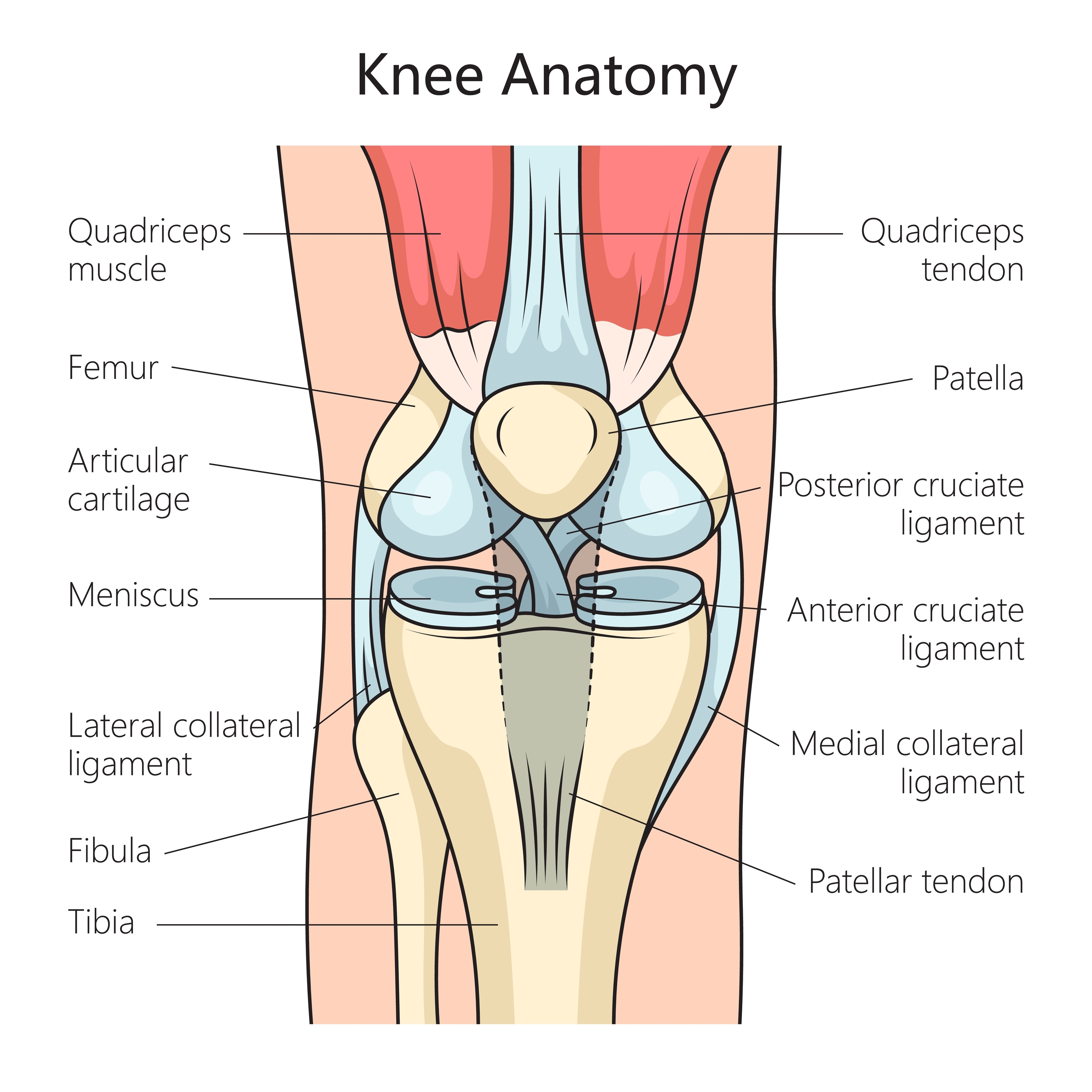
While the knee is often thought of a simple hinge, it is a complex interaction of four bones that work together to support movement and absorb forces:
- The femur (thigh bone) is the largest bone in the body and is on top of the joint, with a small groove for the kneecap to move and slide through.
- The tibia (shin bone) supports most of the body weight and provides a platform for the femur.
- The patella (kneecap) is a specialized bone in front of the knee joint that acts as a pulley, pulling on the thigh muscles to support standing, walking and climbing.
- The fibula is located on the outside of the lower leg, and acts as an anchor for the ligaments and muscles that help stabilize the knee.
All of your body’s weight transfers through this area, making it a common site for injury. Dr. Pervez notes that “even a slight change in how these bones align can lead to friction that causes audible clicks.”
Knee clicks and pops are often not just a “knee problem” and are part of a larger “kinetic chain” problem. Your knee is the middle link between your ankle and hips, and if one of these joints isn’t doing their job, the knee is often blamed.
Common causes of problematic knee sounds include:
- Kneecap (patellar) tracking problems. If the kneecap isn’t gliding at the end of the femur properly, it may be due to muscle weakness on the inner side of the thigh (the VMO – a teardrop-shaped muscle). This can cause the kneecap to get pulled to one side, leading to grinding or popping sounds as it snaps back into place.
- Ankle mobility issues. Restrictions or stiffness in the ankles (often because of old sprains or tight calves) can force the knee into over-rotation during activities like walking or squatting. This rotation can cause discomfort and sounds as tendons to click over the joint.
- Hip and glute imbalances. “The glutes act as a steering wheel for your leg,” Dr. Pervez shares. Weakness in these muscles can cause the leg to turn inwards, affecting how your knee moves and functions. This can lead to clicking and increased wear and tear.
- Meniscus or cartilage wear and tear. Over time, the protective shock absorbers (meniscus) in your knee can wear down and as the joint moves, uneven surfaces can catch or rub against each other.

How a chiropractor can help with knee pain and clicking
If your knee sounds are accompanied by pain or other concerning symptoms, a Lifemark chiropractor can help assess the cause of knee pain and determine whether treatment may be helpful.
A chiropractor will conduct a detailed assessment, including:
- History intake to discuss your symptoms, activities, and overall health.
- Physical examination assessing your knee’s range of motion, stability, and how it moves.
- Functional tests to observe how you move during activities like walking, squatting, or going up stairs.
This holistic approach considers not just the knee, but how your entire body, or “kinetic chain,” is functioning. If the issue stems from an ankle mobility problem or weak hips, Dr. Pervez will address those areas too. Lifemark chiropractors are part of a multidisciplinary team and can recruit the support of other team members such as kinesiologists, to create a truly integrated treatment plan that meets your needs.
Treatment approaches may include:
- Manual adjustments to restore proper alignment and movement in the knee and surrounding joints like the hip and ankle.
- Soft tissue therapy techniques such as cupping, dry needling, or tissue scraping to address muscle tightness and imbalances.
- Rehabilitation exercises to strengthen weak muscles (like glutes and quads), improve flexibility, and enhance joint stability.
- Lifestyle and activity advice guidance on proper form for exercises, appropriate footwear, and modifying activities that aggravate your knee.
“What do you want to achieve?” is a core question guiding the treatment. Whether it’s playing with grandkids or training for a run, the goal is to help you comfortably return to the activities you love.
Proactive knee health: why a functional assessment matters
Understanding your body’s mechanics is key to long-term knee health. A functional assessment with a chiropractor can identify potential issues in your kinetic chain before they become painful problems. “Everyone benefits from functional tests,” Dr. Pervez explains, “we all need everything to work, whether you’re an athlete or just walking around the home.” This proactive approach can help you maintain optimal function and help reduce the risk of degenerative changes down the line.
Most knee clicks and cracks are a normal, harmless part of how your body moves, often caused by gas bubbles or moving tendons. However, if these sounds are accompanied by pain, swelling, locking, or instability, it’s a signal to seek professional help. A Lifemark chiropractor can assess your knee and the surrounding kinetic chain to identify the root cause of problematic knee pain and sounds. Through personalized treatment, including adjustments, soft tissue therapy, and targeted knee exercises, they can help you get back to the activities you love and maintain long-term knee health.
Key takeaways:
- Many knee sounds, like clicks and pops, are harmless and often due to gas bubbles or tendons moving.
- If knee noises are accompanied by pain, swelling, or your knee locks or gives way, it’s important to get it checked by a professional.
- A chiropractor will assess your knee and how your entire body moves, looking for imbalances in the “kinetic chain” (hips, ankles, etc.).
- Treatment for problematic knee sounds and pain can include manual adjustments, soft tissue work, and specific exercises to improve strength and flexibility.
- Proactive steps like regular movement, targeted exercises, and a functional assessment can help maintain healthy knees and prevent future issues.
FAQs:
Are knee clicks bad if they don’t hurt?
Generally, no, if your knee clicks or cracks without any pain, swelling, or instability, it’s usually considered normal and harmless.
What causes my knee to pop above the kneecap?
Popping above the kneecap can be due to tendons moving over bone, gas bubbles in the joint, or sometimes issues with how the kneecap tracks, often related to muscle imbalances.
When should I see a chiropractor for knee pain?
You should consider seeing a chiropractor if your knee pain is recurring, worsening, accompanied by swelling or limited activity, or if the pain just feels like “background noise” that’s impacting your daily life.
Can weak glutes cause knee clicking?
Yes, weak glutes can affect hip stability and how your knee moves, potentially contributing to issues that cause knee clicking or pain.
What exercises can help reduce knee clicking?
Exercises that strengthen the muscles supporting your knee, such as glute bridges, wall sits, and calf raises, along with stretches for hip flexors and the IT band, can be beneficial.
Why does my knee hurt when I squat?
Pain when squatting can be due to various factors, including kneecap tracking issues, muscle imbalances (quads/hamstrings), ankle mobility problems, or even wear and tear in the joint. A functional assessment can help identify the specific cause.